Skip to content
ACCURATE & RELIABLE
DESKTOP UTILITY SEARCHES
- TRANSPARENT PRICING – NO HIDDEN EXTRAS
- RATED 4.9*/5* BY OUR CLIENTS
- PAS 128 COMPLIANT




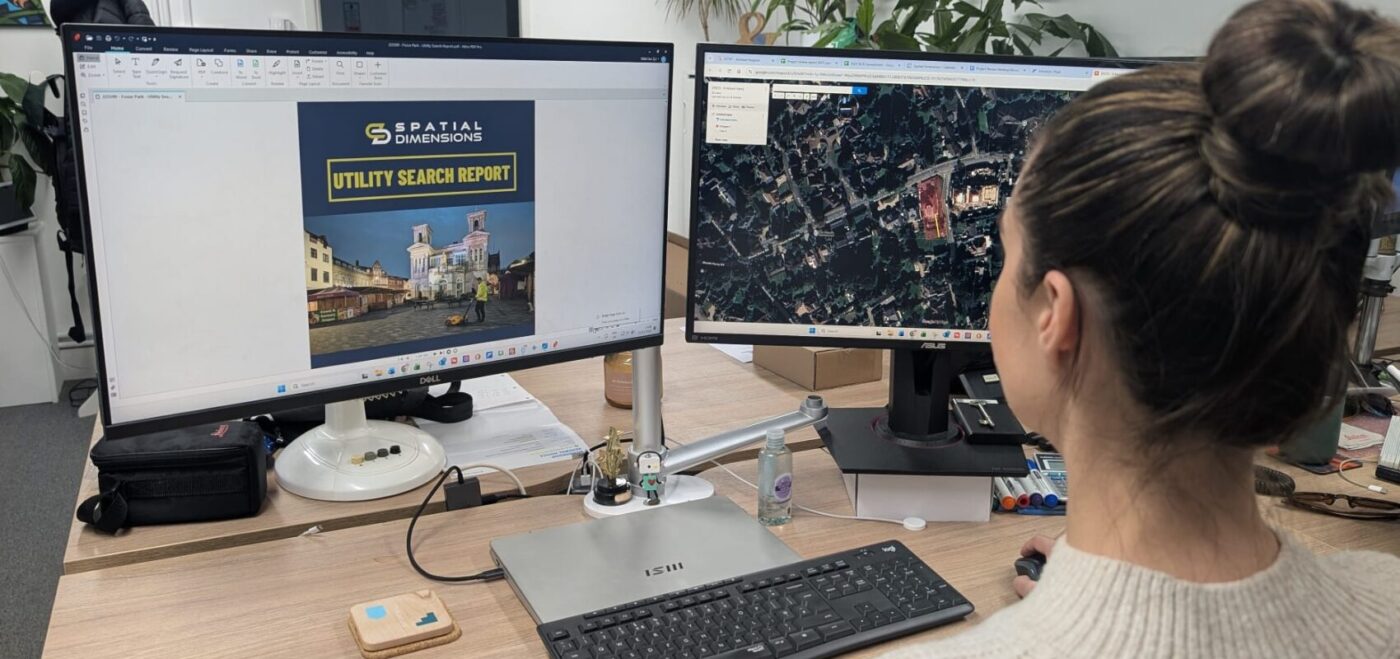
Spatial Dimensions is a UK measured building survey and geospatial company providing desktop utility searches — the statutory records stage of a PAS 128 underground utility survey — for sites anywhere in the UK. Founded in 2012, we work from permanent offices in London, Sevenoaks and Nottingham, and our clients rate us 4.9 out of 5.
In short: a desktop utility search from Spatial Dimensions gathers the official records for the buried services on and around your site from the utility, telecom and pipeline companies that own them, and our in-house CAD team collates everything onto a single Ordnance Survey background. You receive an interim report within 3–5 working days of instruction and the full report in up to 10 days, issued as a digital job pack. A standard search is £450.
or call 01732 458799
What is a desktop utility search?
A desktop utility search is a search of the statutory records held by utility, telecom and pipeline companies — the plans each asset owner keeps of its own buried pipes and cables. In BSI PAS 128:2022, the UK standard for underground utility surveys, it is survey type D, quality level QL-D.
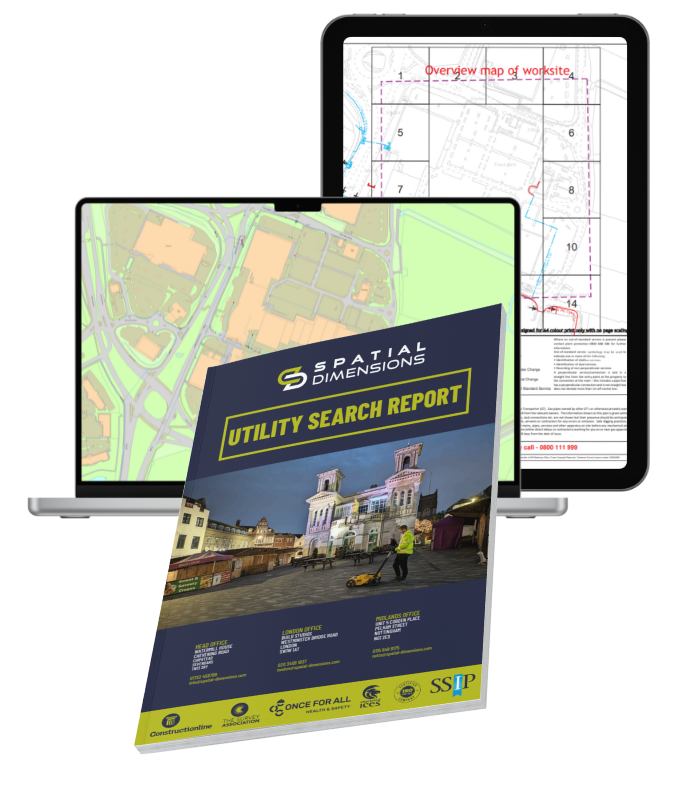
Spatial Dimensions requests asset records covering your site area from each relevant owner: electricity, gas, water, drainage, telecoms and pipeline operators. Because the returned records arrive in different formats, scales and drawing styles, our CAD team overlays them onto a single OS background so the whole picture reads on one drawing, then issues a digital job pack alongside the source records.
No fieldwork is involved at this stage — a desktop search reports what the records say, which is both its value and its limitation.
STANDARD UTILITY STATS PACK
- £450 – NO HIDDEN FEES
- ALL MAJOR UNDERGROUND UTILITIES *
- QUICK TURNAROUND
* includes water, drainage, gas, electricity and BT Openreach
ENHANCED UTILITY STATS PACK
- + £175 – NO HIDDEN FEES
- INDEPENDENT UTILITIES & COMMUNICATIONS*
- QUICK TURNAROUND
* independent utilities
Why does every PAS 128 survey start with a desktop search?
Because the standard requires it. PAS 128 defines four survey types by quality level — D (records search), C (site reconnaissance), B (detection) and A (verification) — and type D is the prerequisite for all the others. The records tell the survey team what should be under the ground before detection begins, and they are the baseline the site results are checked against.
Spatial Dimensions recommends a desktop utility search on every project, whether or not a site survey follows — see our underground utility surveys hub for how the four levels fit together.
What is a desktop utility search used for?
Spatial Dimensions clients use desktop searches for:
- Feasibility and route planning — an early, low-cost view of what is buried, before design or purchase decisions
- Congestion assessment — seeing how crowded the ground is, and pinpointing each cable and pipeline before site work starts
- Safe-digging preparation — putting the records in the site team’s hands before anyone breaks ground
- Briefing the detection survey — telling our electromagnetic location and GPR teams what to look for on site
How long does a desktop utility search take?
Spatial Dimensions issues an interim desktop utility search report within 3–5 working days of instruction, and the full report in up to 10 days. The interim report collates the records received first, giving your team an early working picture; the full report completes it.
On a full utility mapping project the stages run consecutively — topographical survey first, then detection — so order the desktop search at instruction: the records are then in hand before the site survey completes, which matters for the reason below. If you have a deadline, tell us at enquiry stage.
What will I receive?
Swipe the table sideways to see all the columns.
| Deliverable | What it is |
|---|---|
| Interim report | The first collation of returned records, issued within 3–5 working days of instruction |
| Full report | The complete records collation, issued in up to 10 days |
| Records overlay drawing | Every asset owner’s records redrawn by our CAD team onto a single Ordnance Survey background |
| Digital job pack | The collated drawing plus the source records, issued digitally for your design and site teams |
Where a detection survey follows, the records feed straight into it, and utility survey results can be delivered in 2D CAD or as a 3D BIM-compatible Revit model.

Why do the records matter to the on-site survey?
Because the records are the safety net for anything detection cannot find. When Spatial Dimensions carries out a detection survey (PAS 128 QL-B), we compare what we detect against the statutory records, and any recorded service we could not detect on site is appended to the survey results — so it still appears in your data. That comparison is only possible if the records are in hand before the survey completes. In plain terms:
- If the records are not available in time to review, neither Spatial Dimensions nor our professional indemnity insurers can accept responsibility for the survey information, or for damage or injury caused by striking a utility the records would have shown.
- Obtaining statutory records before survey work begins is the client’s responsibility — unless you commission Spatial Dimensions to obtain them as part of the job.
- Records supplied after the survey has started can mean chargeable extra work to review and append them.
Spatial Dimensions carries £10 million of professional indemnity insurance, with zero claims to date; the simplest way to keep that protection intact is to order the desktop search with the survey.
What are the limitations of a desktop utility search?
A desktop search tells you what the asset owners’ records say — it does not measure anything on site. PAS 128 ranks it as QL-D, the lowest quality level in the standard, for exactly that reason: records show where services were planned or believed to be laid, not necessarily where they sit today, and older or privately installed services may not appear in the records at all.
So a desktop search on its own is not a detection survey, and it is not a safe basis for excavation. HSE guidance HSG47, Avoiding Danger from Underground Services, expects buried services to be positively located before digging — which is what the detection (QL-B) and verification (QL-A) stages are for. Spatial Dimensions will tell you plainly where a desktop search is the right stopping point — early feasibility and route options — and where it is not: anything that involves breaking ground.
Who commissions desktop utility searches?
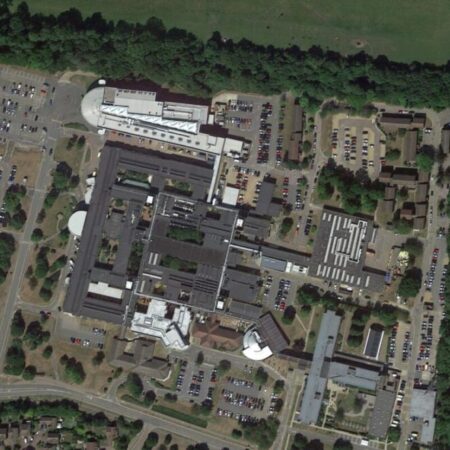
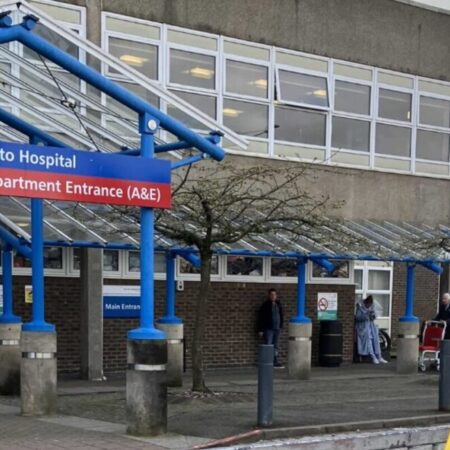
Contractors and site teams preparing to dig, architects and engineers at feasibility and design stages, planners weighing route and layout options, and consultants assembling project due diligence. Recent Spatial Dimensions projects with desktop utility search deliverables include Unity Campus, Kent & Canterbury Hospital, Southend University Hospital, Bracknell Healthspace and St Michael’s School (Ty Mawr).
See our resource pages for contractors, architects, planners and consultants, and our full Guide to Specifying an Underground Utilities Survey, free to download from our guides page.
How much does a desktop utility search cost?
A standard desktop utility search from Spatial Dimensions costs £450 and covers water, drainage, gas, electricity and BT Openreach records. An enhanced search adds independent utility and communications providers for a further £175.
One search order covers a site of up to 1 km²; larger sites need additional searches, and most desktop search orders come to between £450 and £2,500 in total.
Pricing is transparent with no hidden extras, and every Spatial Dimensions quotation states in writing exactly what the search covers before you commit.
To order, send us the site address and the approximate area. We will come back with a written quote within 24 hours. All prices exclude VAT.
or call 01732 458799.
Frequently asked questions
Is a desktop utility search the same as a PAS 128 Type D survey?
Yes. Desktop utility search, desktop records search and PAS 128 survey type D describe the same thing; its results carry quality level QL-D, the prerequisite stage for types C, B and A in PAS 128:2022.
How long does a desktop utility search take?
Spatial Dimensions issues an interim report within 3–5 working days of instruction and the full report in up to 10 days. Order early, so the records are in hand before any site survey completes.
Is a desktop search enough before digging?
No. Records show where services were believed to be laid, not verified positions, and some services never make it into the records. Before excavation, HSG47 expects services to be positively located on site — a QL-B detection survey, and trial holes (QL-A) where depth must be certain. Treat the desktop search as the essential first step, not the last.
What do you need from me to start?
The site address and a boundary showing the area to be searched, plus your instruction. One search order covers up to 1 km².
Who contacts the utility companies?
Spatial Dimensions does, once commissioned — we request records from the utility, telecom and pipeline companies with assets around your site. Otherwise, obtaining the statutory records before survey work begins is your responsibility.
What happens if the records do not arrive before the survey finishes?
They cannot be reviewed or appended to the survey results, and neither Spatial Dimensions nor our professional indemnity insurers can then accept responsibility for undetected services. Records arriving after the survey has started can also mean chargeable extra work.
Do I still need a desktop search if I am booking a full detection survey?
Yes. PAS 128 makes type D the prerequisite for every other survey type. A detection survey without the records in hand carries no protection for anything the equipment could not find.
Order a desktop utility search
Send us the site address and a boundary showing the area to be searched; Spatial Dimensions will reply with a written, fixed-price quote within 24 hours.
Phone: 01732 458799
Offices: London · Sevenoaks · Nottingham · working nationwide
Related services
- Underground utility surveys — the parent service and hub
- PAS 128 utility surveys — the specification and quality levels
- GPR surveys — QL-B detection
- Electromagnetic location surveys — QL-B detection
- Utility verification surveys — QL-A trial holes
- Topographical surveys — the base PAS 128 results are mapped onto